The tree that cannot plant itself.

Verified Cacao

Cacao is the most difficult crop in the world to reproduce, and almost none of what makes that true appears on a label. Three things below are worth knowing. Something is coming.

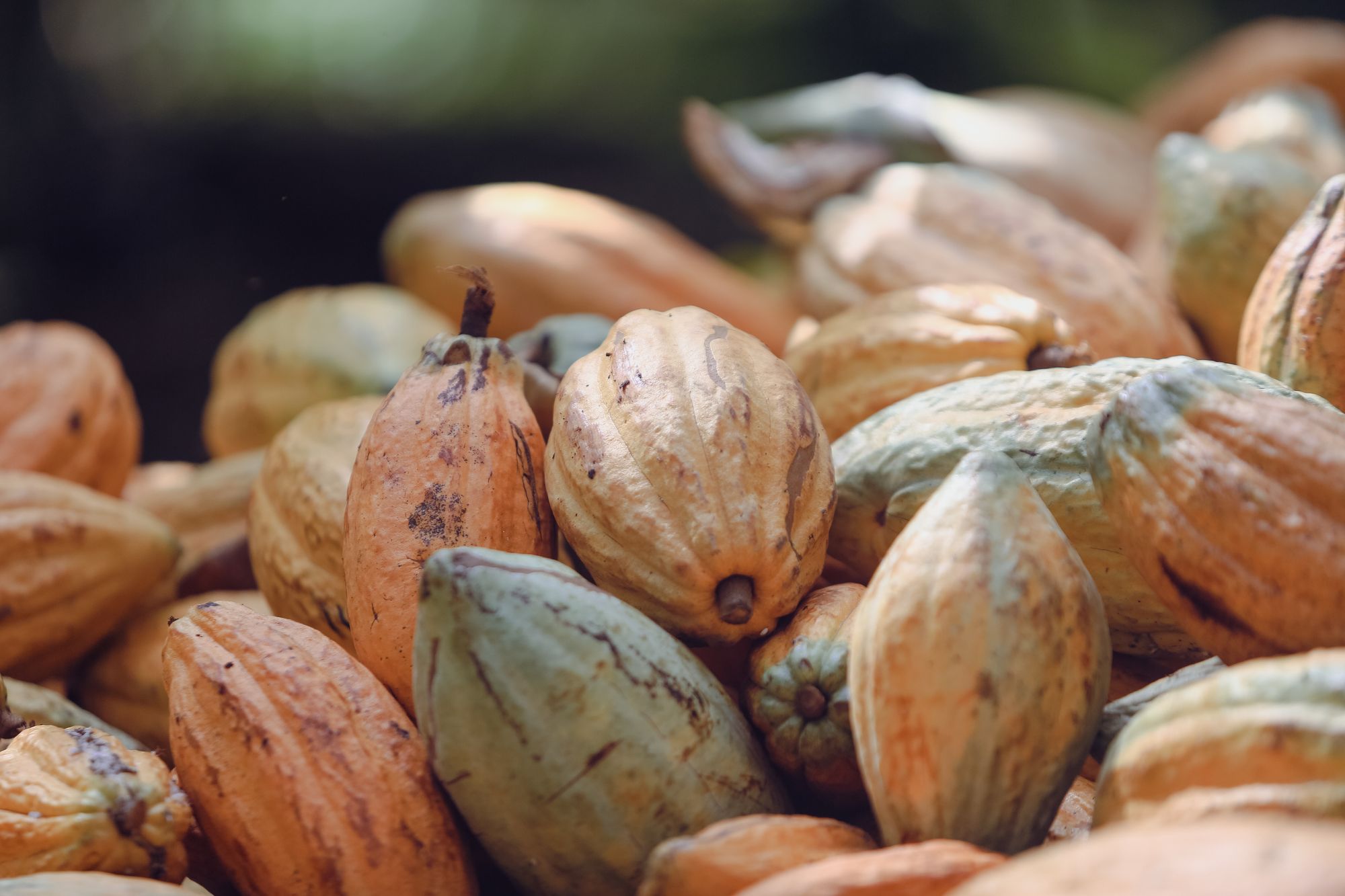
Ripe cacao pods growing directly from the trunk of the tree
Theobroma cacao

01

It is pollinated by a fly the size of a full stop.

Cacao does not use bees. Bees visit the flowers and take pollen, but they do not pollinate them. The work is done almost entirely by biting midges, mostly of the genus Forcipomyia, insects between one and three millimetres long, from the same family as the no-see-ums that bite you at dusk.

The flower is the reason. It is white, roughly a centimetre across, and produces no scent at all. Its reproductive parts sit behind a hooded structure that larger insects physically cannot enter. Only something very small gets in, and among those, only something around two to three millimetres is large enough to reach the pollen at all. The window is narrow in both directions.

Time is against it too. Cacao flowers open and remain receptive for a day or two. A flower that does not receive enough pollen dies and drops within thirty-six hours. Most cacao trees cannot fertilise themselves, so the pollen has to arrive from a different tree entirely, carried by an insect that struggles to fly more than a few metres in still air. A single successful pollination has been estimated to need dozens of grains delivered to the right place.

A mature tree may carry thousands of flowers at once. In cultivation, a very small fraction of them ever become fruit.

And the midges are not really farm insects. They breed in wet leaf litter, rotting wood, decaying pods, sometimes in the water held inside bromeliads growing on other trees. Clear a plantation for light and yield, and you remove the shade, the litter and the damp, which removes the breeding habitat, which removes the pollinator. Some growers now deliberately leave rotting material on the ground to keep the flies alive.

Every pod on earth exists because a fly you cannot see found a flower you cannot smell.
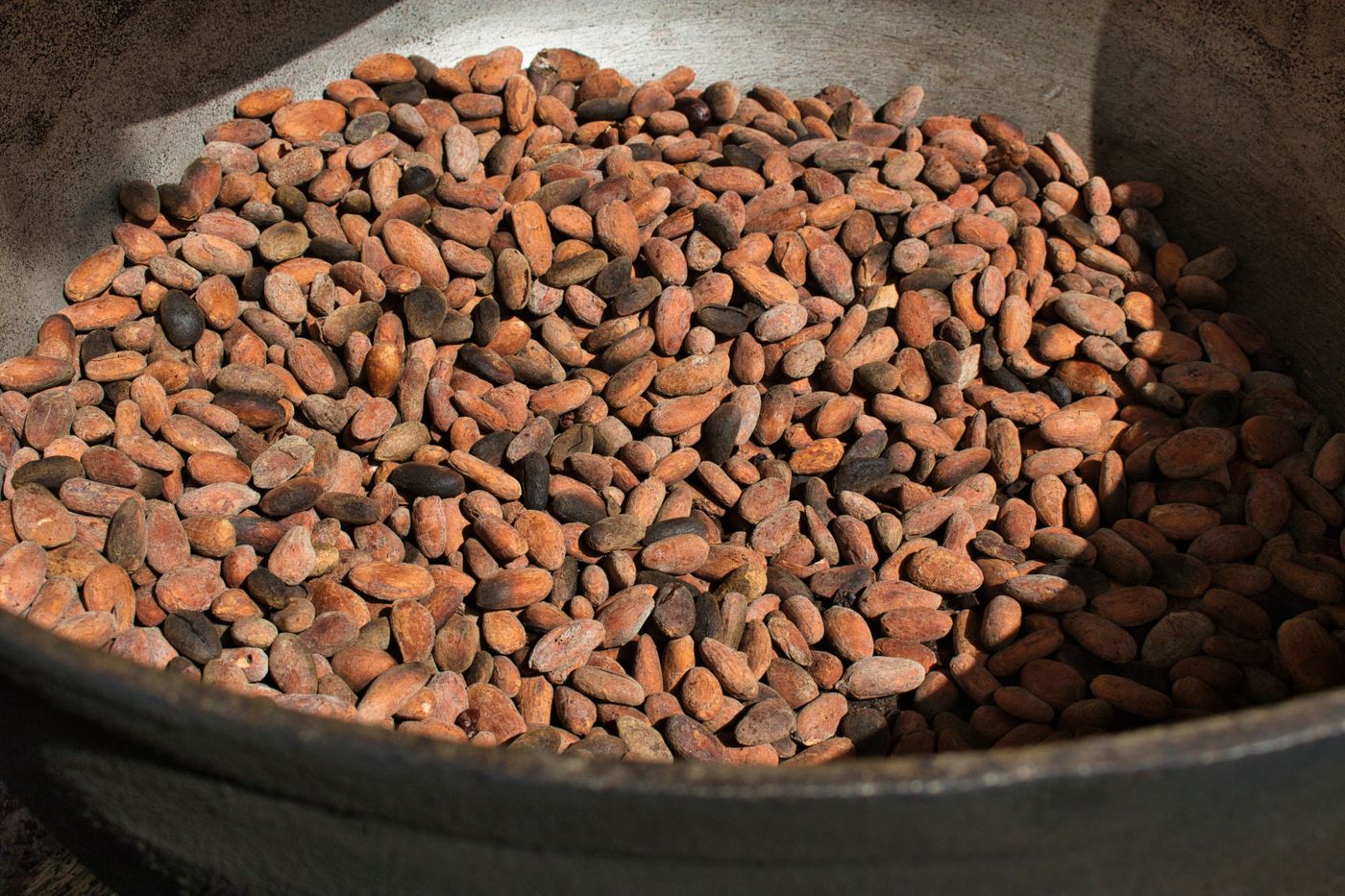
Fresh cacao seeds still coated in their white pulp
Seeds in the pulp, before fermentation

02

The pod has no way of opening. It waits to be found.

Almost every fruit tree you can picture has a method. It splits, it softens, it falls, it is carried off by wind or water. Cacao has none of these. A ripe pod stays fixed to the trunk, sealed inside a thick leathery wall, and if nothing comes for it, it does not drop. It rots where it hangs.

The tree's entire strategy is the pulp. Around each seed is a white, wet, sweet flesh that tastes nothing like chocolate, closer to lychee or mangosteen. That pulp is a payment. Monkeys, squirrels, rodents and some birds gnaw through the shell to reach it, and while they eat, the seeds are discarded or dropped elsewhere.

The bitterness of the seed is deliberate on the tree's part. The alkaloids that make a raw cacao seed unpleasant to chew are what stop the animal from destroying it. The animal eats the sweet part and spits out the valuable part. That is the arrangement, and it is the reason cacao tastes of anything at all.

There is a second detail hiding in plain sight. Cacao flowers and fruits directly from the trunk and the oldest wood, never from the thin outer branches. Botanists call this cauliflory, and fewer than one percent of trees do it. Part of the reason is weight, as a pod can approach half a kilogram and would snap a twig. The other proposed reason is access: the animals that open pods are heavy, and heavy animals cannot reach the ends of branches. So the tree presents its fruit low, on solid wood, exactly where something large enough to break it open can sit.

A single tree yields, in a good year, roughly a couple of kilograms of dried seed. Over a working life of decades, one tree produces a quantity of finished chocolate most households would get through in a few months.

It bribes an animal with sugar to carry away the part it refuses to make sweet.

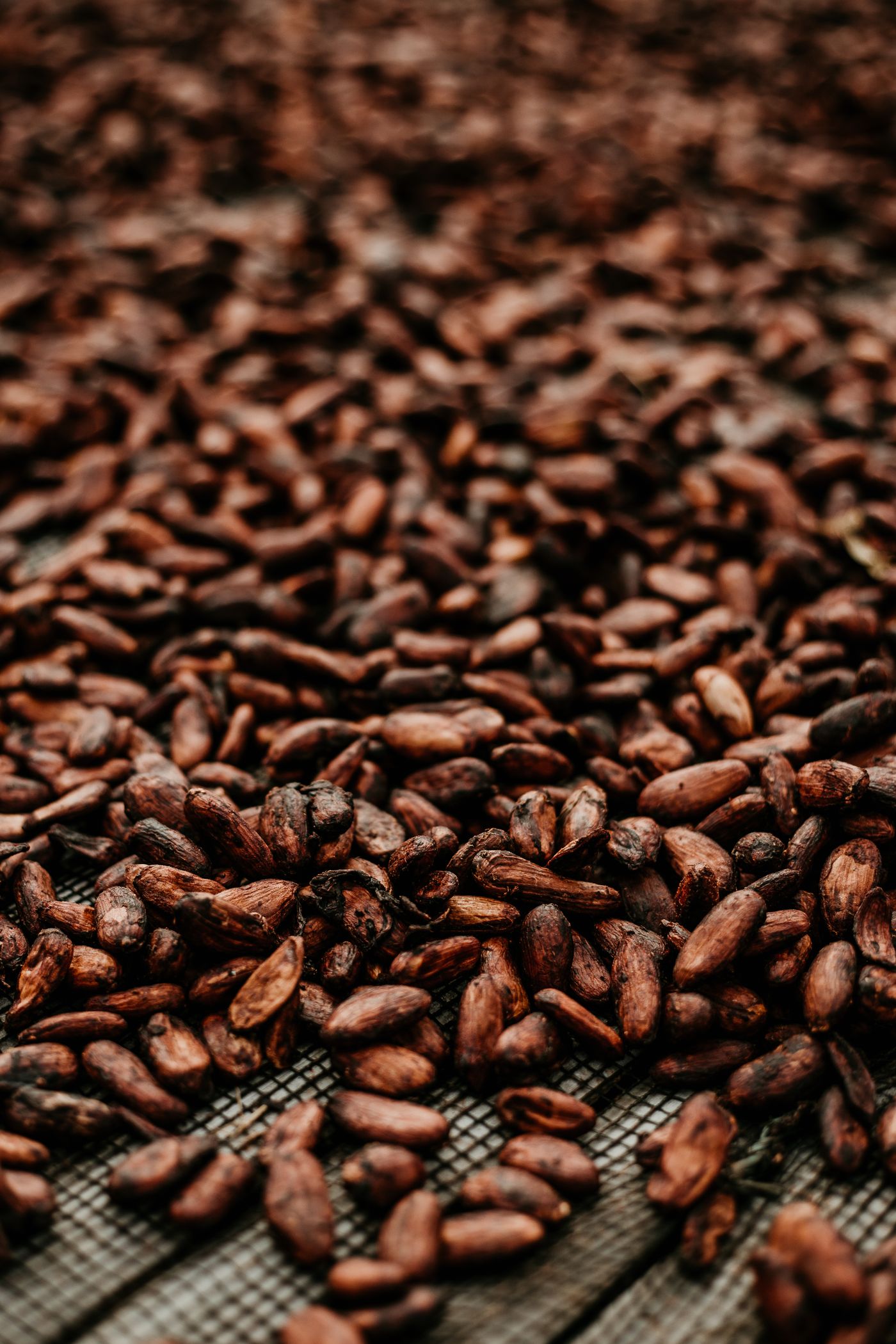
Cacao beans laid out to dry in the open air
Drying, where much of the character is decided

03

Cacao is five thousand years old, and it began in the wrong place.

For most of the last century the story was settled. Cacao belonged to Mesoamerica, to the Maya and the Aztec, and everything before that was unknown. Then the genetics came in and did not agree.

Cacao is at its most genetically diverse not in Mexico or Guatemala, but in the humid forests of the upper Amazon, on the eastern side of the Andes. Diversity of that kind tends to mark the place a species actually comes from. Which raised an awkward question: if cacao originates two thousand kilometres to the south, who was using it there, and when?

The answer surfaced at a site called Santa Ana-La Florida, in the Zamora-Chinchipe province of southeast Ecuador, occupied by a people known as the Mayo-Chinchipe. From their pottery and stone vessels, researchers recovered three separate lines of evidence: cacao starch grains, absorbed residues of theobromine, the alkaloid cacao uniquely carries, and ancient cacao DNA. The dates ran to roughly five thousand three hundred years ago, around a millennium and a half before cacao appears anywhere in Mesoamerica.

What the vessels show is quieter and more interesting than a ceremony. The residues turn up in high-status ritual containers, yes, but also in ordinary domestic pottery. People were not only offering cacao. They were living with it, drinking it at meals, taking it into their graves. Some of their stone mortars were carved in the shape of the pod itself.

And the genetics of what they were handling connects to varieties still growing in Ecuador and northern Peru today. Cacao then travelled, along river systems and trade routes, north through Colombia and eventually into Central America, where the civilisations we credit with it received something already thousands of years into its domestication.

A cup of cacao is not an ancient tradition in the loose sense that phrase usually carries. It is a specific inheritance, from a specific forest, with a documented beginning.

By the time the Maya were writing about it, cacao was already older to them than the Romans are to us.

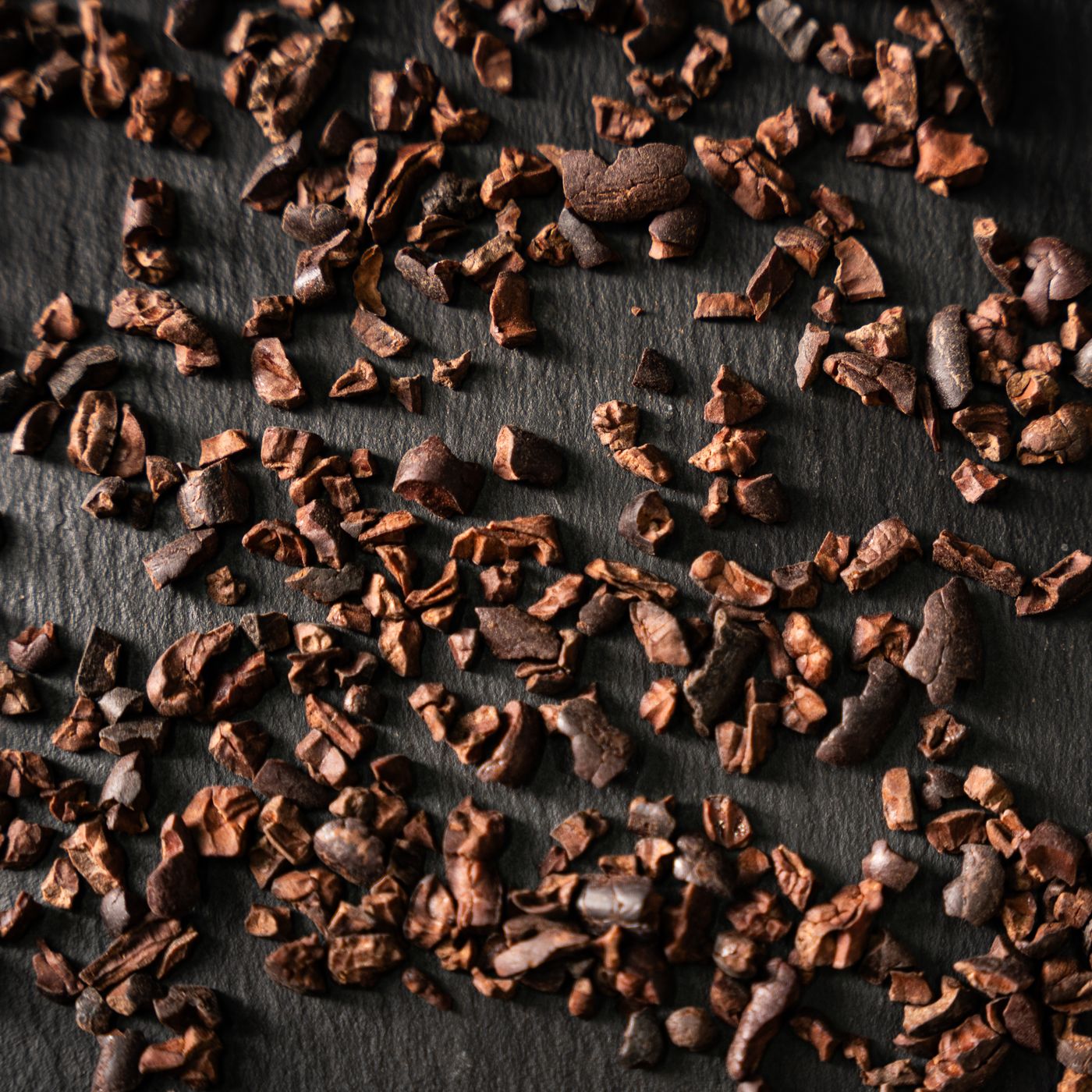
Roasted cacao nibs, cracked from the bean
Nibs, the whole seed with the shell removed

Register

Something is being made. This is where it will be announced.

No newsletter, no schedule, no noise. One message when there is something real to say.

Your address is used to tell you about the first release and nothing else. You can leave at any time from any message.